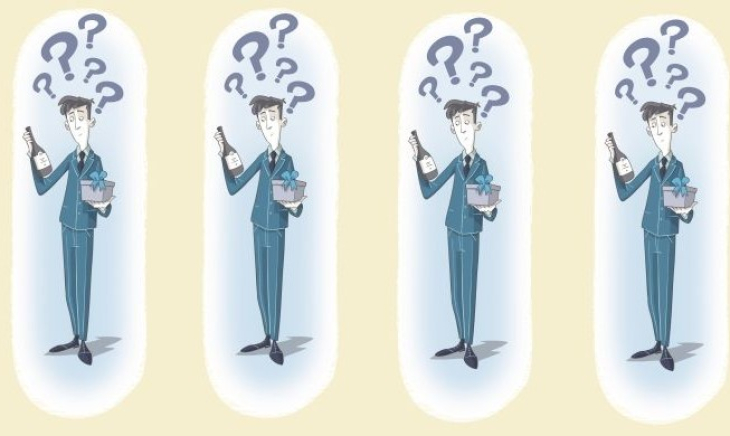
Today, the market is greatly diminishing the significance of gifts, transforming them into either presents or incentives. These are similar phenomena, but in reality they are very different. Yet, if we do not relearn the art of giving, we will lose richness, meaning, faces, and people.
by Luigino Bruni
Published in Il Messaggero di Sant'Antonio on 10/02/2026
I was in Amsterdam, on a layover for my flight to Seoul, and while I waited, I wondered whether or not to buy a small gift for the two colleagues who were waiting for me in Korea and who would be accompanying me in my academic program over the next few days. I reflected for a moment and, at first, thought to myself: “After all, I’m going there for work; Clara and Garam will also be with me for work, and just dedicating an entire week to their universities is a gift in itself.” Then, however, a “second thought” occurred to me: “But precisely because it isn’t necessary, it makes sense to arrive with a small token.” And so, with a modest financial investment, I bought two Dutch porcelain items (by the way: if I’d been “on the ball”—and that thought had occurred to me before leaving—I would have spent a third of the money...).
A gift has, in fact, a strange relationship with the act of thinking of someone. Because, on the one hand, arriving with a gift for someone means exactly that you’ve “thought of” them, that you intentionally wanted to make that gesture. So truly, a gift is a “thought”. On the other hand, however, it is precisely with gifts that the saying “a thought isn’t enough” holds true, because if I had approached my colleagues saying: “Darn, I’d thought about getting you a gift, but then, due to a lack of time, I wasn’t able to—something unexpected got in the way,” that thought would not only fail to replace the gift but, on the contrary, would produce exactly the opposite effect in the recipients of that “thought.” In other words: a gift resembles those contracts that Roman law called “real contracts” (such as a deposit or a pledge), which do not exist without the “thing,” the res. Therefore, a thought without a gift is an anti-gift that produces effects opposite to those of a gift.
This is why things that become gifts change their nature: the intention and the purpose of the gift effect a sort of “transubstantiation”. A bottle of wine bought to drink with my family, and the same bottle of wine purchased to give to the person who invited me to dinner, are two different bottles of wine, even though they are identical from every commercial standpoint. The intention (the “thought”) changes the meaning and direction of that object, which becomes a sacrament of a relationship; and just as with the sacraments of the Church, that object points to something invisible yet real, and every time we look at the object, we are reminded of its giver.
Today, the market is greatly reducing the number of true gifts, transforming them either into mere presents or into incentives. Similar phenomena, yet in reality very different. And yet,if we do not relearn the art of giving, with all its rituals that vary from culture to culture (here in Korea I am learning just how deeply gift-giving practices are rooted in the culture, and if you are unaware of them, you commit many faux pas… which are immediately forgiven), we will lose richness, meaning, faces, and people. One of the most beautiful moments, when I arrive at the office in the morning, is recognizing all the people who still speak to me through their gifted objects, in a dialogue that never ends. This, too, is a splendid language that triumphs over death and allows us to speak with departed friends through their gifts: thanks to the pen Pier Luigi gave me twenty years ago for my professorship in Milan, he continues to write alongside me.
There are many languages in life. Unfortunately, the dominant business culture would like to reduce them all to the language of goods and money. But the day we forget all the languages of things, when we call out to them, they will no longer answer us.
Photo Credit: © Fabiano Fiorin / MSA Archive